
Bolt Testing

Bolt Testing
Proven Bolt Testing and Bolt Failure Analysis
Welding & Joining Management Group® (WJMG) provides bolt testing for bolts, studs, and headed anchor studs, along with bolt failure analysis for fasteners that have cracked, fractured, or performed unexpectedly.
At our metals laboratory, a bolt test can evaluate tensile properties, load response, or performance under applied tension or torque. When a fastener has failed, WJMG can combine mechanical testing with microscopy, chemical analysis, hardness testing, and fracture examination to help determine what happened.
What Can a Bolt Test Tell You?
A bolt test can provide useful information about the mechanical performance of a fastener, including:
- Yield strength
- Ultimate tensile strength
- Elongation
- Load response
- Performance under applied tension or torque
WJMG’s Riehle Tensile Tester can apply forces up to 200,000 pounds while recording force, yield strength, ultimate strength, and elongation.
The appropriate bolt testing method depends on the fastener, its geometry, and the applicable product or project requirements. Providing drawings, specifications, or required test values with your samples helps WJMG determine the correct approach.
Bolt Failure Analysis
A broken fastener shows that something went wrong, but it does not necessarily explain why.
A bolt failure may involve loading conditions, material properties, manufacturing, installation, corrosion, service conditions, or a combination of factors. For this reason, WJMG can evaluate failed fasteners as part of a broader forensic metals investigation.
Depending on the component and available evidence, bolt failure analysis may include:
- Visual examination
- Fracture surface analysis
- Stereo or digital microscopy
- Scanning electron microscopy
- Hardness testing
- Chemical analysis
- Tensile or other mechanical testing
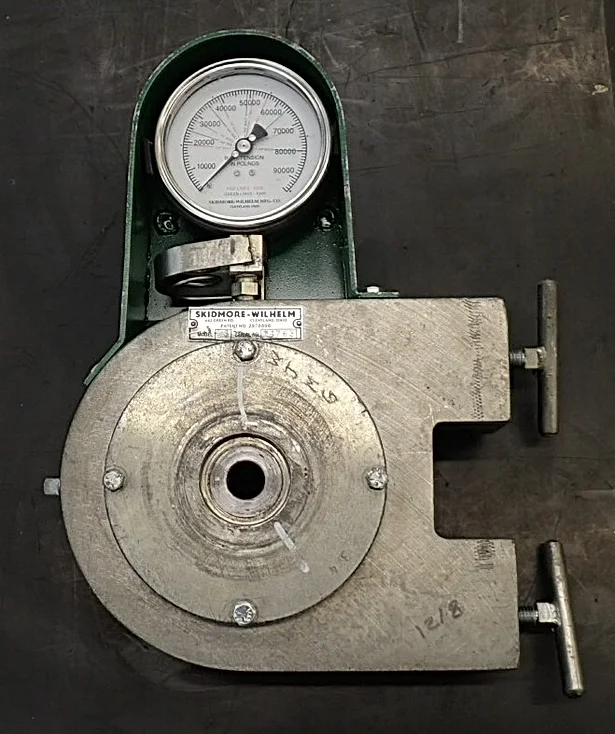
The testing plan is based on the condition of the fastener and the questions that need to be answered rather than applying the same tests to every failure.
Why the Fracture Surface Matters
The fracture surface can preserve valuable evidence about how a bolt failure developed.
Fatigue, overload, brittle fracture, and other failure modes can leave different characteristics on the fractured surface. Identifying the failure mode is an important step before investigating the underlying cause.
The Society for Maintenance & Reliability Professionals explains that recognizing mechanical failure modes can help guide root-cause analysis and prevent investigators from focusing on the wrong potential cause.
WJMG can use optical and electron microscopy when closer examination is needed.
Bolt Testing Standards
Bolt testing is often governed by the product specification, engineering requirements, or another applicable standard.
ASTM F606/F606M establishes mechanical testing procedures for externally and internally threaded fasteners, washers, direct tension indicators, and rivets. Depending on the product, testing may address properties such as proof load, axial tension, wedge tension, hardness, and other mechanical characteristics.
ASTM A370 provides mechanical testing methods for steel products and may also be referenced by applicable material specifications.
If your project references an ASTM, SAE, or other governing specification, provide that information when requesting a bolt test so WJMG can review the appropriate requirements.
What Should You Send With a Failed Bolt?
Preserving a failed fastener in its original condition can improve a bolt failure investigation. Avoid grinding, polishing, aggressively cleaning, or repeatedly fitting fractured surfaces together before laboratory examination when possible.
Helpful materials may include:
- The failed bolt, nut, and washers
- An unused fastener from the same lot
- Material specifications or drawings
- Installation torque or preload information
- Photographs of the installed component
- Service and operating conditions
- Details surrounding the failure
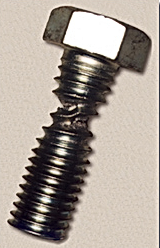
Additional context can help WJMG develop a more focused testing plan.


Why Choose WJMG for Bolt Testing?
WJMG combines bolt testing with mechanical testing, metallurgy, microscopy, and chemical analysis.
That range of capabilities is particularly useful when a routine bolt test develops into a larger question about material properties, fracture behavior, or bolt failure.
Our team works with bolts, studs, and headed anchor studs and can coordinate additional laboratory analysis when needed.
Bolt Testing FAQs
Can WJMG test bolts that have not failed?
Yes. WJMG performs bolt testing using tension or torque to evaluate specified mechanical values. The appropriate method depends on the fastener and applicable requirements.
Can WJMG investigate a broken bolt?
Yes. A bolt failure investigation may include fracture examination, microscopy, hardness testing, chemical analysis, and mechanical testing depending on the condition of the fastener.
What standard is used for bolt testing?
ASTM F606/F606M is commonly used for mechanical testing of threaded fasteners and related products. Additional standards may apply depending on the material and project.
Can WJMG test studs and headed anchor studs?
Yes. WJMG provides mechanical testing for bolts, studs, and headed anchor studs.
Schedule a Bolt Test With WJMG
Whether you need bolt testing for a new fastener or an investigation following a bolt failure, WJMG can help determine the appropriate testing approach.
Contact Welding & Joining Management Group® in Frederick, Colorado to discuss your bolt test requirements, specifications, available samples, or failure history.