
Hardness Testing for Welds: What It Indicates (and What It Doesn’t)

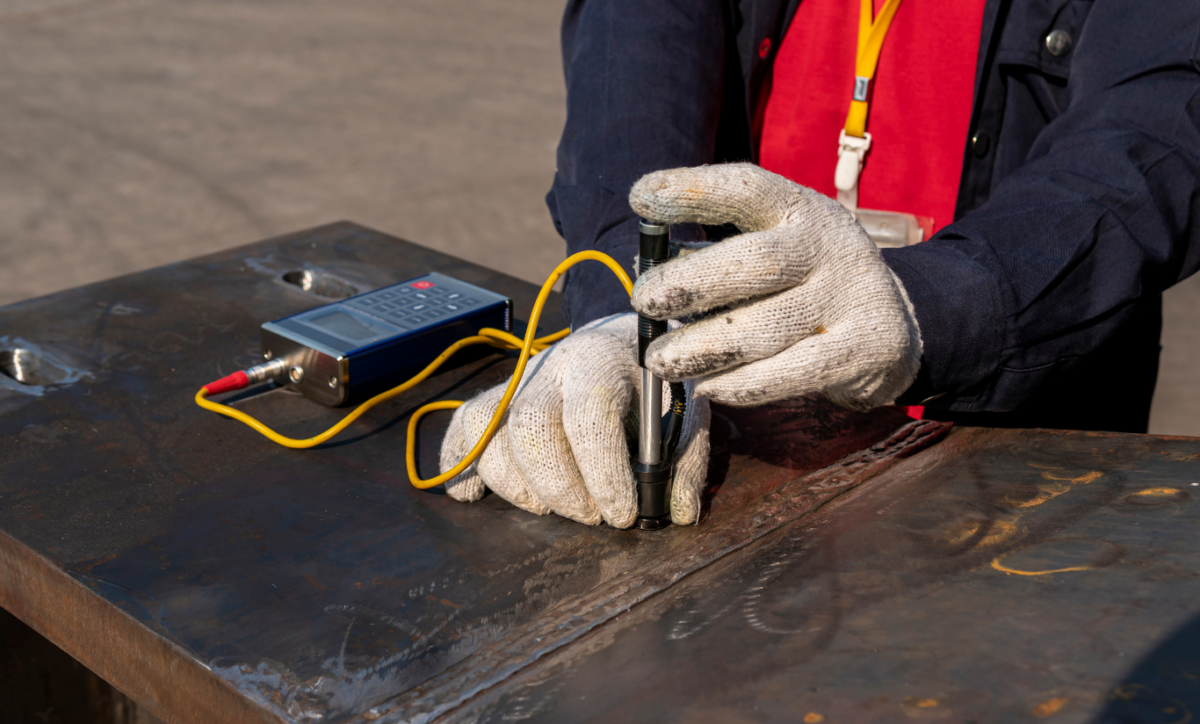
In welding and joining technology, hardness testing is one of the quickest ways to check how a weld and its heat affected zone reacted to heat input, cooling rate, and any heat treatment. It can flag areas that became unusually hard, confirm repeatability across multiple joints, and point you toward the right follow up test. However, the trap is treating hardness like a pass or fail score. It is a useful indicator, not a full verdict.
What Hardness Testing Measures
Hardness tests measure resistance to indentation. Because welding changes microstructure locally, weld metal, heat affected zone, and base metal can end up with different hardness values. The most meaningful results come from comparing several locations across the weld region, not from a single isolated number.
Common Methods for Weld Hardness
In welding and joining technology, the method should match the weld size and the question you are trying to answer.
- Microhardness (Vickers or Knoop): Best for a hardness traverse across weld metal and heat affected zone regions. WJMG offers Vickers and Knoop testing in alignment with common welding codes and specifications, including AWS, ASME, API, and NACE MR0175 references.
- Rockwell hardness: A faster option when there is enough area for the indentation method. WJMG notes Rockwell testing can be performed per ASTM E18 when applicable.
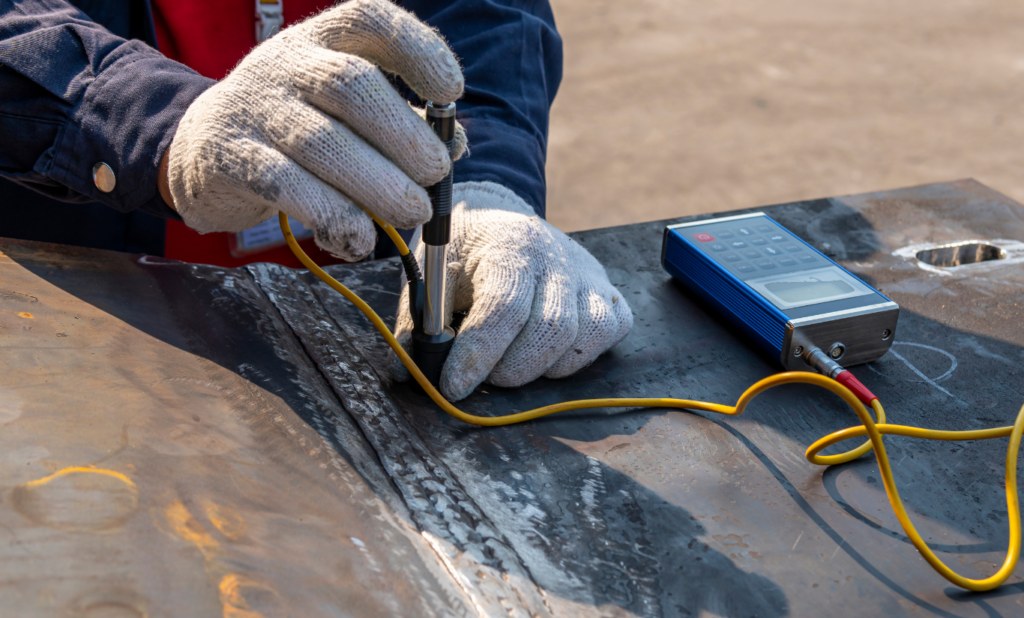
WJMG’s metals lab also lists multiple hardness machines and portable capability for larger components.
What Hardness Testing Can Indicate
Hardness becomes most valuable for welding and joining technology when you look at the profile across the joint.
Strength trends, not strength proof: Hardness often correlates with tensile strength for many steels well enough to help you screen where strength may be trending higher or lower. A traverse can reveal how that trend changes through weld metal and the heat affected zone.
Potential brittleness or cracking risk: Very high hardness in the heat affected zone can be a warning sign in materials prone to forming hard, brittle structures after rapid cooling. That is why some specifications include hardness limits, including in sour service contexts where weld and heat affected zone hardness may need to stay below a defined threshold.
Procedure and repair consistency: In welding and joining technology, hardness mapping is a practical way to compare an original weld to a repair weld, or one joint to the next, when parameters or consumables may have changed.
What Hardness Testing Does Not Indicate
Hardness is not a stand in for overall weld quality. In welding and joining technology, keep these limits in mind.
- Toughness: Hardness does not measure impact toughness. When toughness is required, Charpy impact testing is commonly used, and standards can specify locations in both weld metal and the heat affected zone.
- Discontinuities: Hardness does not detect lack of fusion, porosity, or cracking. That calls for inspection and nondestructive testing.
- Chemistry and corrosion behavior: Hardness cannot confirm filler chemistry or corrosion performance.
How To Get Results You Can Trust
In welding and joining technology, most “bad” hardness data is really “bad setup.” Surface condition, curvature, spacing, and correct region identification all matter. Etching is often used to visually reveal weld, heat affected zone, and base metal boundaries so hardness points are placed correctly. WJMG notes etching is essential for seeing these regions during hardness work.
A practical best practice is to request a traverse plan up front: which method will be used, where indents will be placed, and what region labels will be reported. That turns hardness readings into a defensible story instead of a confusing list of numbers.
Where WJMG Fits In
When hardness results raise questions, the next step in welding and joining technology is connecting the profile to weld boundaries, procedure details, and service conditions. WJMG supports weld hardness testing with multiple methods and metallurgical preparation, including mounting and etching, to help interpret what the numbers mean in the context of the joint.
In welding and joining technology, the goal is confidence: knowing what hardness indicates, what it does not, and what to do next.