
What Is Fastener Testing? A Guide with WJMG

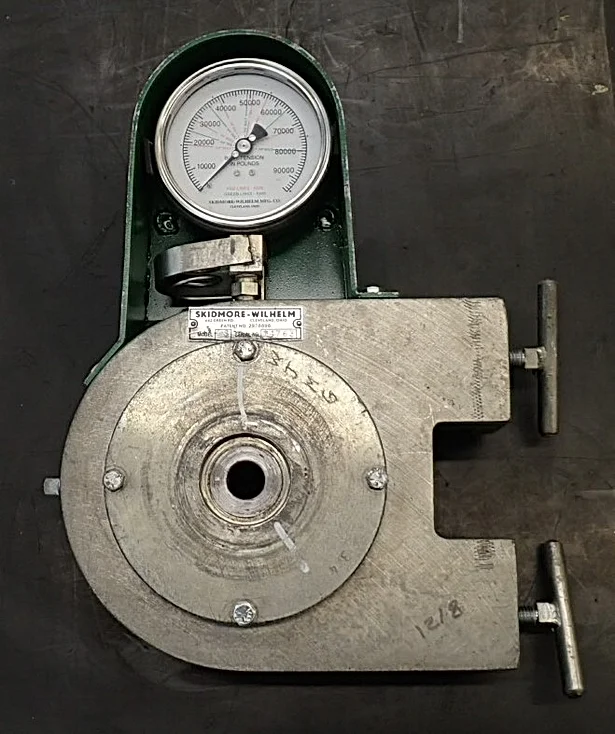
Fasteners may be small compared with the structures, equipment, and assemblies they hold together, but their performance can directly affect safety and reliability. Fastener testing evaluates bolts, studs, nuts, anchors, and related components to determine whether they meet required mechanical properties, material specifications, and performance expectations.
For manufacturers, fabricators, contractors, engineers, and failure investigators, testing helps answer a critical question: Will this fastener perform as intended under the conditions it is expected to face?
What Does Fastener Testing Evaluate?
The testing process can involve different methods depending on the component, specification, application, or suspected problem. ASTM F606/F606M, for example, outlines mechanical test methods for threaded fasteners, washers, direct tension indicators, and rivets.
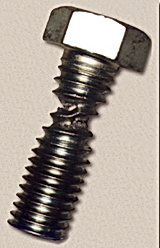
Common areas of evaluation include:
- Tensile strength to determine how a fastener responds to axial pulling force
- Proof load or yield-related performance to evaluate response under a specified load
- Hardness to help verify material condition and heat treatment
- Torque testing to evaluate performance when rotational force is applied
- Fracture examination when a fastener has cracked or failed
- Chemical or metallurgical analysis when material composition or processing is in question
The appropriate test program depends on the fastener, governing specification, service conditions, and reason for the evaluation.
Why Is Fastener Testing Important?
A bolt can look acceptable and still have a material, manufacturing, heat-treatment, installation, or service-related issue that is not obvious visually. Fastener testing can support qualification, quality control, compliance verification, troubleshooting, and failure analysis.
When a failure has occurred, testing can also provide evidence about how and why it happened. Simply confirming that a fastener broke does not explain the failure mechanism. Engineers may need to consider loading, hardness, material chemistry, fracture characteristics, installation conditions, corrosion, fatigue, and other contributing factors before reaching a conclusion.
How Does WJMG Test Bolts and Other Fasteners?
Welding & Joining Management Group provides mechanical testing capabilities for bolts, studs, headed anchor studs, and other metal components. Depending on the project, WJMG can use tension or torque testing to evaluate required values and perform tensile testing to measure properties such as ultimate strength, yield strength, and elongation.
WJMG’s metals laboratory also provides hardness testing using Rockwell, Vickers, Knoop, and Brinell methods. These capabilities can help verify mechanical properties or investigate whether material condition contributed to unexpected performance.
When the question extends beyond whether a fastener met a required load, WJMG can take the investigation further.
What Happens When a Fastener Fails?
Fastener testing after a failure may require several forms of evidence. WJMG can combine visual examination with microscopic analysis, fracture-surface evaluation, mechanical testing, and chemical analysis depending on the investigation.
This broader approach can help identify the failure mode, locate the fracture initiation area, evaluate material characteristics, and determine which factors most likely contributed to the failure.
WJMG’s welding and metallurgical expertise is especially valuable when fasteners are part of welded structures, fabricated assemblies, anchors, equipment, or other load-bearing systems. Looking at the fastener within the larger assembly can provide a more useful engineering picture than evaluating the broken component alone.
When Should You Consider Fastener Testing?
Fastener testing may be appropriate when:
- Verifying that bolts or studs meet a project or material specification
- Qualifying components before installation or use
- Investigating a cracked, fractured, or prematurely failed fastener
- Confirming hardness, tensile, or torque-related properties
- Supporting engineering, quality-control, compliance, or forensic investigations
Get Answers From an Experienced Metals Testing Team
Reliable fasteners are essential to reliable assemblies. Whether the goal is verifying mechanical properties before service or determining why a component failed, WJMG brings mechanical testing together with welding, metallurgy, microscopy, chemical analysis, and forensic expertise.
If you need fastener testing for bolts, studs, anchors, or related metal components, contact WJMG to discuss the component, applicable specification, and testing questions your project needs to answer.